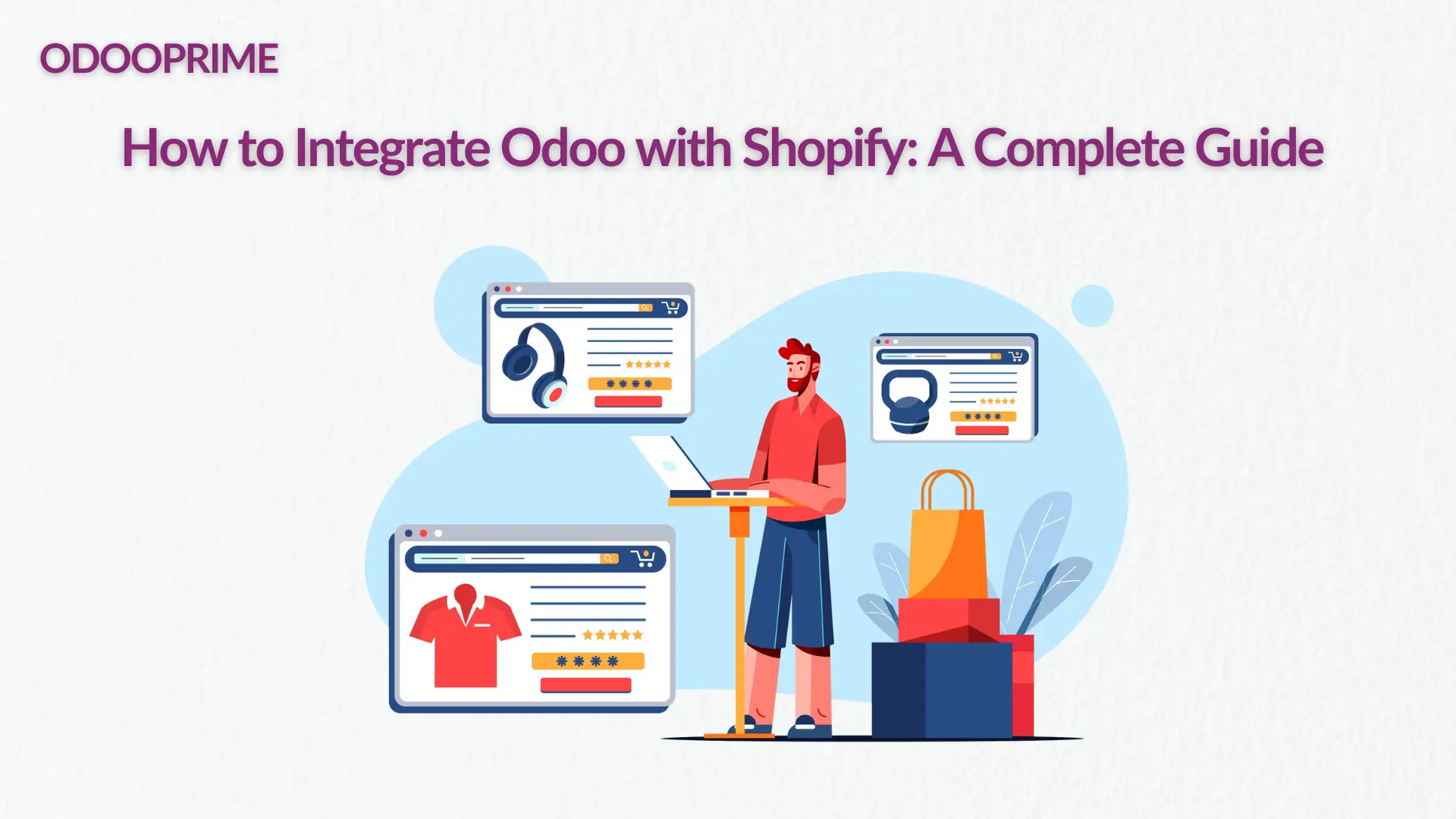
As e-commerce continues to grow rapidly in 2025, businesses need seamless systems to manage online sales, inventory, accounting, and customer data efficiently. Integrating Odoo with Shopify has become one of the most effective ways to connect front-end eCommerce operations with back-office ERP processes.
In this guide, we explain how to integrate Odoo with Shopify in 2025, key benefits, integration methods, common challenges, and best practices for a successful implementation.
Why Integrate Odoo with Shopify?
Shopify is a powerful eCommerce platform, while Odoo is a full-featured ERP system. When integrated, they create a unified ecosystem that improves operational efficiency and scalability.
Key Benefits of Odoo–Shopify Integration:
- Centralized product and inventory management
- Automatic order synchronization
- Real-time stock updates
- Seamless customer data flow
- Accurate accounting and invoicing
- Scalable operations for growing businesses
For businesses working with an Odoo Partner in Dubai, this integration is especially valuable for managing multi-currency sales, VAT compliance, and regional logistics.
What Data Can Be Synced Between Odoo and Shopify?
A well-configured integration allows two-way synchronization of critical business data.
Commonly Synced Data:
- Products and variants
- Inventory levels
- Orders and order status
- Customers and contact details
- Payments and invoices
- Shipping and fulfillment updates
This real-time data flow eliminates manual entry and reduces errors.
Methods to Integrate Odoo with Shopify in 2025
There are multiple ways to integrate Odoo and Shopify, depending on business requirements and technical complexity.
1. Using Odoo Shopify Connector Modules
This is the most common and cost-effective method.
How It Works:
- Install a Shopify connector module in Odoo
- Configure Shopify API credentials
- Map products, orders, customers, and taxes
- Enable automatic or scheduled sync
Best For:
- SMEs and mid-sized eCommerce businesses
- Faster deployment with minimal customization
Many businesses rely on experienced implementation teams or an Odoo Partner in Dubai to ensure proper configuration and long-term scalability.
2. Custom API Integration
For advanced requirements, a custom API-based integration is ideal.
Features:
- Fully customized data flow
- Advanced pricing rules and workflows
- Multi-store and multi-warehouse support
- Complex tax and logistics scenarios
Best For:
- High-volume eCommerce businesses
- Enterprises with unique business logic
This approach requires strong technical expertise but offers maximum flexibility.
3. Third-Party Middleware Platforms
Platforms like iPaaS tools can act as a bridge between Odoo and Shopify.
Pros:
- Faster setup
- Minimal coding
- Cloud-based monitoring
Cons:
- Ongoing subscription costs
- Limited customization compared to native Odoo solutions
Step-by-Step: Odoo Shopify Integration Process
Here is a simplified overview of the integration workflow in 2025:
Step 1: Requirement Analysis
- Define sync scope (products, orders, customers, inventory)
- Identify automation rules
- Decide on real-time vs scheduled sync
Step 2: Choose Integration Method
- Connector module
- Custom API integration
- Middleware solution
Step 3: Configure Shopify API
- Generate API keys
- Set access permissions
- Connect Shopify store with Odoo
Step 4: Data Mapping & Testing
- Map fields correctly
- Test order creation, inventory sync, and invoicing
- Validate tax and currency rules
Step 5: Go Live & Monitoring
- Enable live synchronization
- Monitor errors and performance
- Optimize workflows
Common Challenges in Odoo–Shopify Integration
While powerful, the integration comes with challenges if not planned properly.
Common Issues:
- Inventory mismatches
- Order duplication
- Tax and VAT configuration errors
- API rate limits
- Currency conversion issues
Working with an experienced Odoo Partner in Dubai helps mitigate these risks through proper planning and testing.
Best Practices for Successful Integration
To ensure long-term success in 2025, follow these best practices:
- Use staging environments before going live
- Keep product SKUs consistent across platforms
- Automate error logging and alerts
- Schedule regular sync audits
- Plan scalability for high traffic periods
Why Odoo–Shopify Integration Matters in 2025
In 2025, customers expect:
- Faster order processing
- Accurate stock availability
- Seamless omnichannel experiences
An integrated Odoo–Shopify system ensures your eCommerce operations remain competitive, data-driven, and future-ready.
Choosing the Right Integration Partner
Successful integration is not just about tools, it’s about expertise. Businesses often work with a certified Odoo Partner in Dubai to ensure:
- Correct system architecture
- Secure API connections
- Compliance with regional tax regulations
- Scalable ERP and eCommerce operations
Conclusion
Integrating Odoo with Shopify in 2025 is no longer optional; it’s a strategic necessity for eCommerce growth. Whether you choose a connector module or a custom API solution, the right integration approach can transform your operations, improve accuracy, and drive scalability.
With the right planning and professional guidance, Odoo and Shopify together can become a powerful engine for digital commerce success.