Dubai SMEs are investing heavily in ERP systems.
Odoo has become a leading choice because it is flexible, scalable, and cost-effective.
Yet many businesses struggle during implementation.
The software is powerful.
Implementation mistakes are expensive.
Missed deadlines, budget overruns, and frustrated employees can quickly derail a project.
If your company is considering Odoo ERP in Dubai, avoiding these common pitfalls can save time, money, and unnecessary stress.
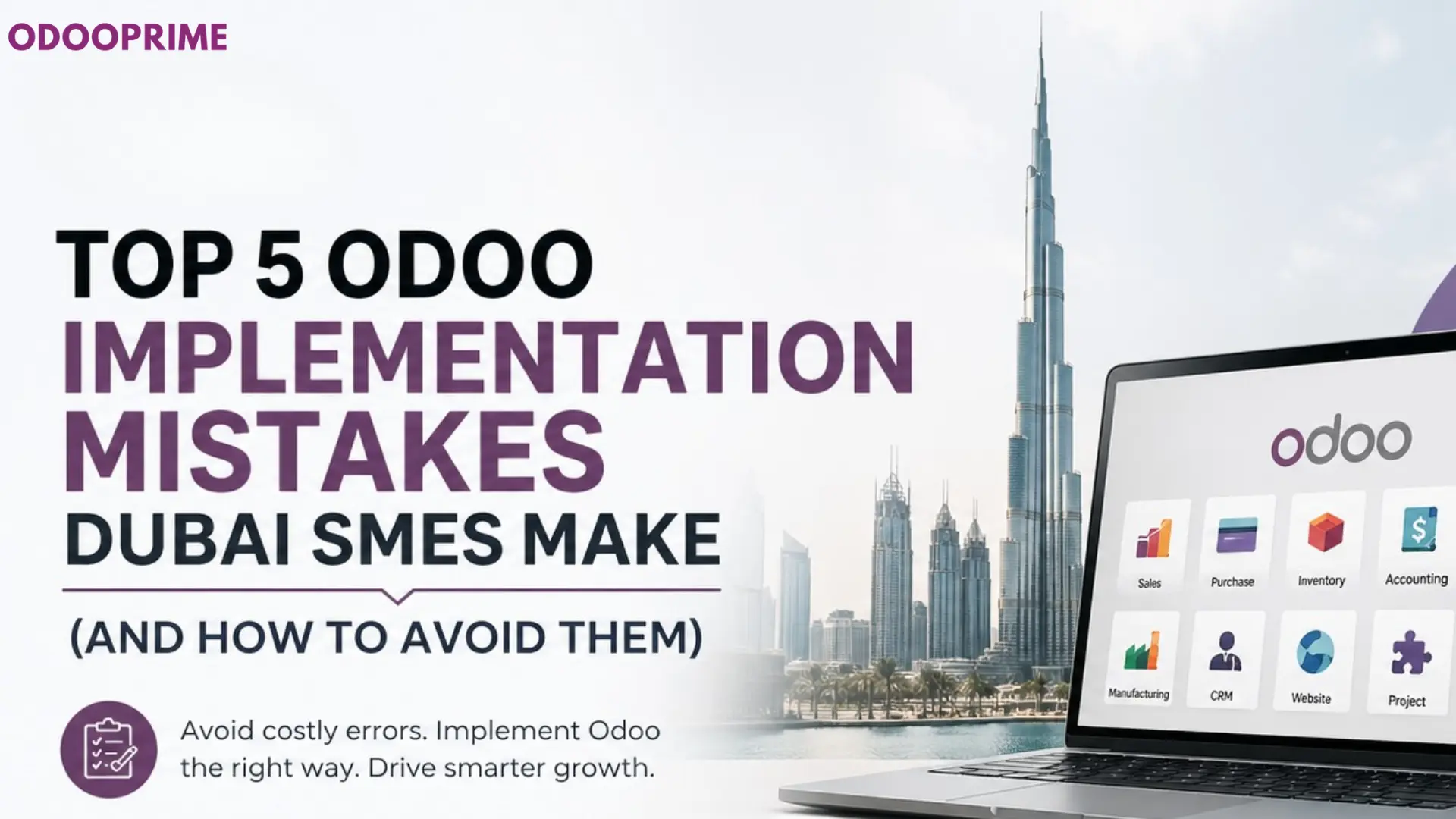
This guide explains the five biggest mistakes Dubai SMEs make during Odoo Implementation in Dubai and how to avoid them.
Why Odoo Implementation Often Fails for SMEs
ERP implementation is not just a software project.
It is a business transformation initiative.
Many SMEs underestimate the planning, communication, and change management required.
Common failure reasons include:
- Unclear objectives
- Inexperienced implementation partners
- Poor user adoption
- Lack of executive support
- Inadequate post-launch support
A successful Odoo project aligns technology with business goals.
Without that alignment, even the best ERP system can underperform.
Dubai’s fast-moving business environment leaves little room for implementation delays.
Companies need a structured rollout plan from day one.
Mistake #1: Choosing the Wrong Implementation Partner
Selecting an inexperienced vendor is one of the costliest mistakes.
Not all Odoo partners deliver the same level of service.
Some focus only on technical deployment.
Others lack industry-specific experience.
A poor partner can lead to:
- Missed deadlines
- Weak configurations
- Budget overruns
- Limited scalability
Dubai SMEs should look for a partner with proven local experience.
They should understand UAE tax regulations, payroll requirements, and compliance standards.
Ask for:
- Client references
- Industry case studies
- Certified Odoo consultants
- Post-launch support capabilities
The right partner becomes a long-term technology advisor.
The wrong one becomes an expensive lesson.
How to Select the Right Odoo Partner
Start with a detailed evaluation process.
Do not choose based on price alone.
Review their portfolio.
Speak directly with existing clients.
Assess their understanding of your business workflows.
Important questions include:
- Have you implemented Odoo for similar businesses?
- What is your implementation methodology?
- How do you manage data migration?
- What support is included after launch?
A reliable Odoo partner will prioritize business outcomes, not just software deployment.
Mistake #2: Poor Requirement Gathering
Many implementations fail before they even begin.
Why?
Because requirements were never properly documented.
Without clear business requirements, the project quickly loses direction.
This often leads to:
- Scope creep
- Cost increases
- Rework
- User dissatisfaction
Your team must identify:
- Current pain points
- Required modules
- Workflow requirements
- Reporting needs
- Integration expectations
Every department should be involved.
Finance, sales, HR, operations, and management all have unique requirements.
Skipping this stage guarantees problems later.
Building a Clear ERP Roadmap
A roadmap acts as your implementation blueprint.
It should include:
- Business goals
- Key milestones
- Budget allocation
- Resource assignments
- Success metrics
Document everything.
Approval from all stakeholders is essential.
A well-defined roadmap reduces surprises and keeps the project on track.
Mistake #3: Excessive Customization Too Early
Odoo is highly customizable.
That does not mean you should customize everything immediately.
Many SMEs overcomplicate their implementation.
They try to replicate every legacy process.
This creates:
- Longer deployment times
- Higher costs
- Upgrade challenges
- Increased maintenance
Start with standard Odoo functionality.
Adopt best practices first.
Only customize when there is a genuine business need.
Remember:
Customization should support growth, not technical debt.
When Customization Makes Sense
Customization is justified when:
- Regulatory compliance requires it
- A unique business model demands it
- Competitive advantage depends on it
Before customizing, ask:
“Can we achieve this using standard Odoo workflows?”
If yes, avoid custom development.
Mistake #4: Ignoring Employee Training
Software adoption depends on people.
Even the best ERP system fails if employees do not use it correctly.
Lack of training causes:
- Resistance to change
- Data entry errors
- Lower productivity
- Poor ROI
Training should begin before launch.
It must continue after go-live.
Role-based training works best.
Each department needs practical, real-world instruction.
Interactive workshops are far more effective than generic manuals.
Training Strategies That Work
Successful training programs include:
- Hands-on sessions
- Process-specific tutorials
- Video resources
- Super-user programs
- Refresher courses
Appoint internal champions.
They help employees adapt quickly.
Strong adoption accelerates ROI.
Mistake #5: Skipping Post-Go-Live Support
Launch day is only the beginning.
Many SMEs assume implementation ends after deployment.
It does not.
Post-launch support is critical for:
- Bug fixes
- Performance optimization
- User assistance
- Future enhancements
Without support, small issues become major disruptions.
Your Odoo partner should offer structured support plans.
This ensures long-term system stability.
Why Ongoing Support Matters
Business needs evolve.
Your ERP must evolve too.
Regular support helps you:
- Add new modules
- Improve workflows
- Maintain security
- Stay current with updates
Continuous optimization delivers maximum value.
Final Thoughts
Odoo can transform Dubai SMEs.
But success depends on implementation quality.
Avoid these five common mistakes:
- Choosing the wrong partner
- Poor requirement gathering
- Over-customization
- Weak employee training
- Ignoring post-launch support
A strategic approach ensures faster deployment, higher adoption, and better ROI.
If you are planning Odoo Implementation in Dubai, working with an experienced team makes all the difference.
Explore Odooprime’s expert solutions for Odoo ERP in Dubai and build an ERP system designed for long-term growth.